laint appears to be filed for commercial purposes because of the market share that has shifted from Wyeth's products to bio-identical products from compounding pharmacies. If the complaint were upheld, patients and their doctors would not have a choice in hormone treatments. Wythe's commercial strategy of trying to eliminate the 'competition' from compounding pharmacies is against the public interest and in the interest of its own corporate profits. Women and their doctors should be able to choose between patented formulations such as those offered by Wyeth, bioidentical formulas available from compounding pharmacies, and no hormone treatment. I have been taking bio-identical hormones for several years and have had excellent results in improving my symptoms. I have been unable to take other synthetic hormones in the past, and am very concerned that my best treatment option will be taken away.
With new 64-slice CT scanners popping up everywhere nowadays, be sure to get your heart scan with it.
The new scanners do indeed provide wonderful images of the coronary arteries. But, say you have a 20% blockage in one artery by a coronary angiogram generated on one of these devices. What will you do in 1, 2, or 3 years when you want to know if you have progressed? Should you have the CT angiogram repeated?
Well, if you did you'll be exposed to a large dose of radiation--appropriate for a diagnostic test, but not for a screening test. The radiation exposure is not that different from undergoing a full conventional cardiac catheterization, or up to 100 chest x-rays.
"20% blockage" is also, contrary to popular opinion, not a quantitative measure. It is just an estimate of the diameter reduction at one spot. That number says nothing about the lengthwise extent of plaque. It also says nothing about the potential for "remodeling", the phenomenon of artery enlargement that occurs as plaque grows. In other words, if you had another CT coronary angiogram a year later and was told that your blockag was still 20%, in reality you could have had substantial plaque growth but it would not be reflected in that value.
People will come to me after having a CT angiogram for an opinion. Unfortunately, I send them back to their scan center to get a simple coronary calcium score. That measure is easy, quantitative, precise, and can be repeated yearly if necessary to track progression. (Track Your Plaque--I hope most of you get this by now.) Some physicians poke fun at the heart scan, or calcium, score--it's old, boring, only a measure of hard plaque. None of that's true. The coronary calcium score is a measure of total plaque (hard and soft). And when you are empowered to learn how to control and reduce your score, then it's the most exciting number in your entire health program!
Don't fall for the hype. If you go to a scan center and they insist on a 64-slice CT scanner, or if your doctor orders one, you should insist on getting a calcium score out of the test. Just ask. If they refuse, go somewhere else. Centers that refuse to generate a score have one thing on their mind: identifying people with severe blockages sufficient to obtain the downstream financial bonanza--angioplasty, stents, and bypass surgery.
Clair first came to attention at age 57 when she suffered a large heart attack involving the front of her heart (the "anterior wall") two years ago. Her cardiologist implanted a drug-coated stent. Her doctors advised her to "cut the fat" in her diet, exercise, and take Lipitor.
One year later, she required a stent to another artery (circumflex). At this point, Clair was thoroughly demoralized and terrified for her future. Her first heart attack left her heart muscle with only 50% of normal strength.
She came to my office for another opinion. Of course, one of the first things we did was to identify all causes of her heart disease. No surprise, Clair had 7 new causes not previously identified, including low HDL (37 mg/dl), a severe small LDL particle pattern (75% of all particles were small), and Lp(a).
Her blood pressure was also 190/88, despite her relatively slender build and 3 medications that reduced blood pressure. That's a Lp(a) effect: Exagerrated coronary risk along with unexpected hypertension that often seems inappropriate.
In fact, I saw several patients just this week with lipoprotein(a), Lp(a), and exagerrated high blood pressure (hypertension). It's not that uncommon.
Though it has not been described in the medical literature, our experience is that hypertension is a prominent part of the entire Lp(a) "syndrome".
Lp(a) is responsible for much-increased potential for coronary disease (coronary plaque). It increases in importance as estrogen recedes in a woman (pre-menopause and menopause) and testosterone in a man, since both hormones powerful suppress Lp(a) expression (though why and how nobody knows).
I believe that Lp(a) is also responsible for hypertension that most commonly develops in a persons mid-50s and onwards, often with a vengeance. 3 or 4 anti-hypertensive medications and still not controlled.
Role of l-arginine
L-arginine may be more helpful in this situation than others. L-arginine, recall, is the supply for your body's nitric oxide, a powerful dilator of the body's arteries and thereby reduces blood pressure. We use 6000 mg twice a day, a large dose that requires use of powder preparations rather than capsules.
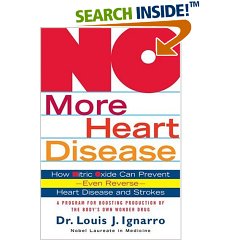
More reading about l-arginine and nitric oxide is available through Nobel laureate, Dr. Louis Ignarro's book, NO More Heart Disease : How Nitric Oxide Can Prevent--Even Reverse--Heart Disease and Stroke, available at Amazon.com ( http://www.amazon.com/gp/product/0312335814/104-1247258-6443909?v=glance&n=283155).
Will l-arginine truly reverse heart disease on its own? No, I don't believe so. Contrary to Dr. Ignarro's extravagant claims, I find l-arginine a facilitator of plaque regression, i.e, it helps other strategies achieve regression, but it does not achieve regression or reversal by itself. (Note that Dr. Ignarro is a lab researcher who studies rats and has never treated a human being.)
But l-arginine may have special application in the person with lp(a), particularly if hypertension is part of the syndrome.
Note: As always, please note that I talk frankly about l-arginine and other supplements and medications but have no hidden agenda: I am not selling anything, nor am I affiliated with any source/website/store etc. that sells these products. If I advocate something, I do so because I truly believe it, not because I'm trying to sell something. I make this point because so much nonsense is propagated in the media because of profit-motive. That's not true here.
In the era up until the 1980s, most Americans indulged in excessive quantities of saturated fats: fried chickem, spare ribs, French fries, gravy, bacon, Crisco, butter, etc.
Along came people like Nathan Pritikin and Dr. Dean Ornish, both of whom were vocal advocates of a low-fat nutritional approach. In their programs, fat composed no more than 10% of calories. This represented a dramatic improvement--at the time.
In 2006, a low-fat diet is a perversion of health. It means over-reliance on breads, breakfast cereals, pasta, crackers, cookies, pretzels, etc., the foods that pack supermarket shelves and that now constitute 70-80% of most Americans' diet.
Dr. Ornish still carries great name recognition. As a result, his outdated concepts still gain media attention. The June, 2006 issue of Reader's Digest, in their RDHealth column, carried an interview with Dr. Ornish in which he reiterates his fat-phobia.
However, on this occasion he takes a different tack. This time he rails against the "dangers" of fish oil and omega-3 fatty acids. "I've recently learned that omega-3s are a double-edged sword...In some cases, omega-3s could be fatal."
He goes on to say that, while he believes that fish oil may prevent heart attacks, it has fatal effect if you already have heart disease.
Does this make sense to you?
He's basing his views on a single, obscure study published in 2003 conducted in rural England that showed an increase in death and heart attack on fish oil. Most authorities have not taken these findings seriously, since they are wildly contrary to all other observations and because the study had some design flaws.
Despite the fact that this isolated study runs counter to all other, better-conducted studies seems not to matter to Dr. Ornish.
Clinging to the low-fat concept is like hoping 8-track tapes will make a comeback. It's not going to happen. We enjoyed the benefits while they lasted, appropriate for the era. But now, they're woefully outdated.
The overwhelming evidence is that fish oil provides tremendous benefits with little or no downside. In the Track Your Plaque program, fish oil remains a crucial supplement to gain control over your coronary plaque and stop or reduce your heart scan score. Ignore the doomsday preachings of Dr. Ornish.
(Watch for an article I wrote updating the benefits of fish oil for Life Extension magazine.)
Evan spotted the kiosk set up in the middle of the local mall. "Free cholesterol screenings. Know your heart health!" the sign declared.
It was a free cholesterol screening being offered by a local hospital.
The friendly nurse behind the kiosk had Evan fill out a form, then pricked his finger. Five minutes later, she reported to him with a smile, "Sir, your cholesterol is 177--your heart's fine! We get concerned when cholesterol is over 200. So you're in a safe range."
What the nurse failed to recognize is that Evan's HDL was 30 mg, a low value that actually places him at high risk for heart disease. Low HDL also signifies high likelihood of the small LDL particle pattern, a marked predisposition towards pre-diabetes and diabetes, a probable over-reliance on processed carbohydrates in his diet, a dramatically increased probability of hidden inflammation (e.g., elevated C-reactive protein), increased tendency for high blood pressure. . .
In other words, Evan's "favorable" total cholesterol is, in truth, nonsense. It's misleading, falsely reassuring, and provided none of the insight that a real effort might have yielded. Like hippies, tie-dye, other relics of the 1960s, total cholesterol needs to be put to rest. It has served many people poorly and been responsible for countless deaths.
When you see a kiosk or other service like this, even if it's free, run the other way.
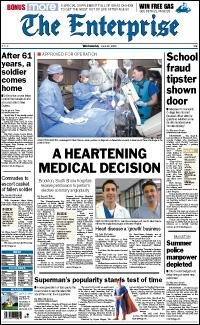
So announced a Boston newspaper recently, featuring a story about new heart program at a local hospital.
They were announcing how a hospital had entered the cardiovasculare procedure game and how it would boost their bottom line. The article discussed how the hospital administration was anticipating "a surge in patients from the baby boom generation."
To justify this new program, the article quoted an administrator from another hospital: "Cardiovascular issues is [sic] the number one cause people sought treatment at our hospital."
The hospital featured in the story had spent $13.5 million dollars to develop their program.
Do you think they'll make it back?
You bet they will--many times over. Hospitals are businesses, complete with a bottom line, an expectation of profit and an eye towards growth.
The hospitals in the city where I live (Milwaukee, Wisconsin) are, as in Boston and elsewhere, very aggressive--expanding into new territories, hiring new "salesmen" (physicians), all to capture more marketshare and produce more "product" (your coronary angioplasty, stent, bypass surgery, defibrillator, etc.).
The equation for hospital profits is tried and true. Ignore your heart disese risk and you can help your local hospital grow its business. Neglect to get your heart scan and you can help your hospital pay down its debt. Get a heart scan, then do nothing about it, and you may even justify a pay raise for the hospital administrators for record revenue growth and profit.
Hospitals are a growth business because of the failure of most people and their doctors to 1) identify hidden coronary disease (CT heart scan to obtain your heart scan score), then 2) seize control over it (the Track Your Plaque program or, at least, your doctor's guidance along with your efforts at prevention).
Unless you do so, you are highly likely to help your hospital boost its annual goal for procedures.